Hotel owner technology solutions that cut admin in 2026
Discover hotel owner technology solutions that solve key problems with measurable results, saving time and boosting occupancy and guest satisfaction effectively.
If you're juggling staffing gaps, OTA pressure, and guest expectations, it's easy to buy "helpful" tools that just add more tabs and more work. You need hotel owner technology solutions that fix one clear problem at a time and prove their value in numbers you already track. We'll show you seven practical systems and how to choose a minimal stack that saves time, protects margins, and makes the guest journey smoother.
Key Takeaways
Effective hotel owner technology solutions focus on solving one clear problem at a time and are measured by metrics you already track, such as occupancy and direct booking rates.
A fast, mobile-friendly website with a seamless booking engine and strong local SEO increases direct bookings and reduces reliance on OTAs.
Automating guest messaging and service requests from enquiry to check-out lowers staff workload and improves guest satisfaction.
A simple revenue management stack with a cloud PMS, channel manager, and rate rules reduces human error and maximises revenue opportunities.
Using a lightweight CRM and email automation turns guest data into repeat stays with personalised, targeted campaigns.
Successful technology rollouts require budgeting for total costs, prioritising integration, piloting changes, and ensuring staff adoption through clear ownership and training.
Start With The Problems Worth Solving (And The Metrics That Prove It)
When occupancy dips or reviews slide, the instinct is to "get new software" fast, then you end up with scattered logins and no clear return. Start by picking one business problem that shows up every week, then tie it to one or two metrics you can move in 90 days.
A practical way to do this is to map problems to measures you already recognise:
Low occupancy or weak rates → Occupancy, ADR, RevPAR, direct vs OTA mix.
Rising labour costs → Labour cost per occupied room, time-to-resolve requests, housekeeping turnaround time.
Inconsistent service → Review score trends, response time, complaint volume, chargebacks.
Data scattered across tools → Time spent on reporting, manual errors, duplicated guest records.
Now set a baseline with a simple snapshot: last 30 days of occupancy, ADR, RevPAR, and your top three sources of bookings. Then pick a target like "increase direct bookings by 15%" or "cut average guest response time from 15 minutes to 5 minutes". If you can't define a before-and-after, the tech choice will turn into opinion, not management.
Get Found And Get Booked: Website, Booking Engine, And Local SEO Basics
If your website loads slowly, looks dated on mobile, or hides key details, you pay for it in OTA commissions and lost enquiries. You don't need a flashy redesign, you need a site that answers guest questions in seconds and makes booking feel effortless.
Start with three basics:
Mobile-first pages that load fast: compress images, keep your room pages scannable, and put location, parking, breakfast, and check-in times where guests actually look. A simple FAQ section can reduce repetitive pre-arrival calls like "Can I check in late?"
A booking engine that matches how people buy: real-time availability, clear cancellation terms, Apple/Google Pay where possible, and the ability to add upsells (late check-out, parking, breakfast) without a phone call.
Local SEO that wins "near me" searches: keep your Google Business Profile updated (photos, opening hours, attributes), keep your name/address/phone consistent, and request reviews at the right moment, typically the morning after check-out.
Track it like an owner: direct booking share, website conversion rate, and cost per acquisition (including OTA commission). If you want a practical view of how guest-facing journeys are changing, our take on creating seamless guest journeys with AI voice assistants is useful when you're planning what "good" looks like in 2026.
Automate Guest Messaging And Service Requests From Enquiry To Check-Out
If your team answers the same five questions all day, Wi‑Fi, parking, breakfast times, late check-out, extra towels, you're paying skilled people to do repetitive work. The right messaging and service-request setup reduces front desk interruption and shortens the time between request and resolution.
Aim for automation across three moments:
Pre-arrival: send directions, parking notes, check-in details, and an upsell offer (for example, "£20 late check-out if available"). This alone can cut day-of-arrival phone calls.
During the stay: centralise requests from WhatsApp/SMS/web chat so they don't vanish into personal phones. Route "extra towels" to housekeeping, "room too warm" to maintenance, and keep a timestamped record.
Post-stay: trigger a review request 12–24 hours after check-out and capture private feedback before it becomes a public complaint.
You'll know it's working when response time drops, resolution time tightens, and your review scores stop swinging with whoever is on shift. If you're exploring voice and multilingual support, how multilingual voice interfaces boost guest experience is a helpful reference for reducing friction without adding headcount.
Use A Simple Revenue Stack: Channel Manager, Rate Rules, And Demand Signals
Overbookings, rate parity headaches, and "why did we sell that weekend too cheaply?" are usually system problems, not staff problems. A simple revenue stack gives you one source of truth and fewer opportunities for human error.
For most independent and small groups, keep it lean:
Cloud PMS as the system of record for inventory, reservations, and guest profiles.
Channel manager to sync availability and rates across OTAs in real time, so you don't oversell when two bookings land at once.
Rate rules (or a lightweight RMS) to stop you pricing off gut feel. Start with rules you can explain: "If pace is ahead of last year and occupancy is over 80% for Friday, raise rate bands by £10–£20" or "If pickup is slow 14 days out, open a fenced offer for direct bookings only."
Add demand signals you can actually use: local events calendar, school holidays, competitor rate spot-checks, and your own pickup trends. Then review once a week for 20 minutes instead of "whenever someone remembers". Measure RevPAR, pickup by channel, and forecast accuracy so you can see if the stack is doing its job.
Turn Guest Data Into Repeat Stays With Lightweight CRM And Email Automation
If every stay ends as a one-off transaction, you keep paying the "first booking" cost again and again. A lightweight CRM approach helps you turn guest data into repeat stays without needing a full-time marketing hire.
Start by unifying what you already have, PMS data, booking engine information, stay notes, and messaging history, so you can build usable guest profiles. Even basic fields make a difference: last stay date, room type booked, reason for travel, and preferences like "quiet room" or "late breakfast".
Then run simple, measurable campaigns:
Pre-arrival: practical info plus one relevant add-on (parking for drivers, early check-in for business travellers).
Post-stay: a thank-you, a review prompt, and a "book direct next time" benefit that you can honour.
Win-back: if a guest hasn't returned in 6–9 months, send a seasonal offer tied to what they did last time (for example, weekend break vs midweek corporate).
Keep an eye on repeat stay rate, email revenue, and unsubscribe rate. If you want ideas on loyalty mechanics and what premium hotels are doing with AI, enhancing guest loyalty in premium hotels through AI offers a useful playbook you can simplify for an SME operation.
Choose And Roll Out Tech Without Chaos: Budgeting, Integrations, And Staff Adoption
The fastest way to waste money on tech is to roll it out without owners' discipline: unclear scope, no integration plan, and no training time. You can avoid the chaos with a short selection and rollout process that treats implementation like an operational change, not an IT task.
Use this four-step approach:
Audit your current stack in one hour: list PMS, POS, Wi‑Fi, door locks, payments, accounting, and any guest messaging tools. Note what connects to what, and where someone exports to spreadsheets.
Budget for total cost, not just licence fees: include setup, hardware (tablets, devices), staff training hours, and downtime risk. Put a simple payback target in writing, such as "save 10 staff hours per week" or "increase direct bookings by 5%".
Prioritise integrations and open APIs: if your PMS can't pass data to your channel manager, messaging, and CRM, you will pay the "manual admin tax" forever.
Pilot, then phase in: start with one property or one department (for example, front desk messaging only). Keep a weekly check-in where staff can show what's breaking, not just what's working.
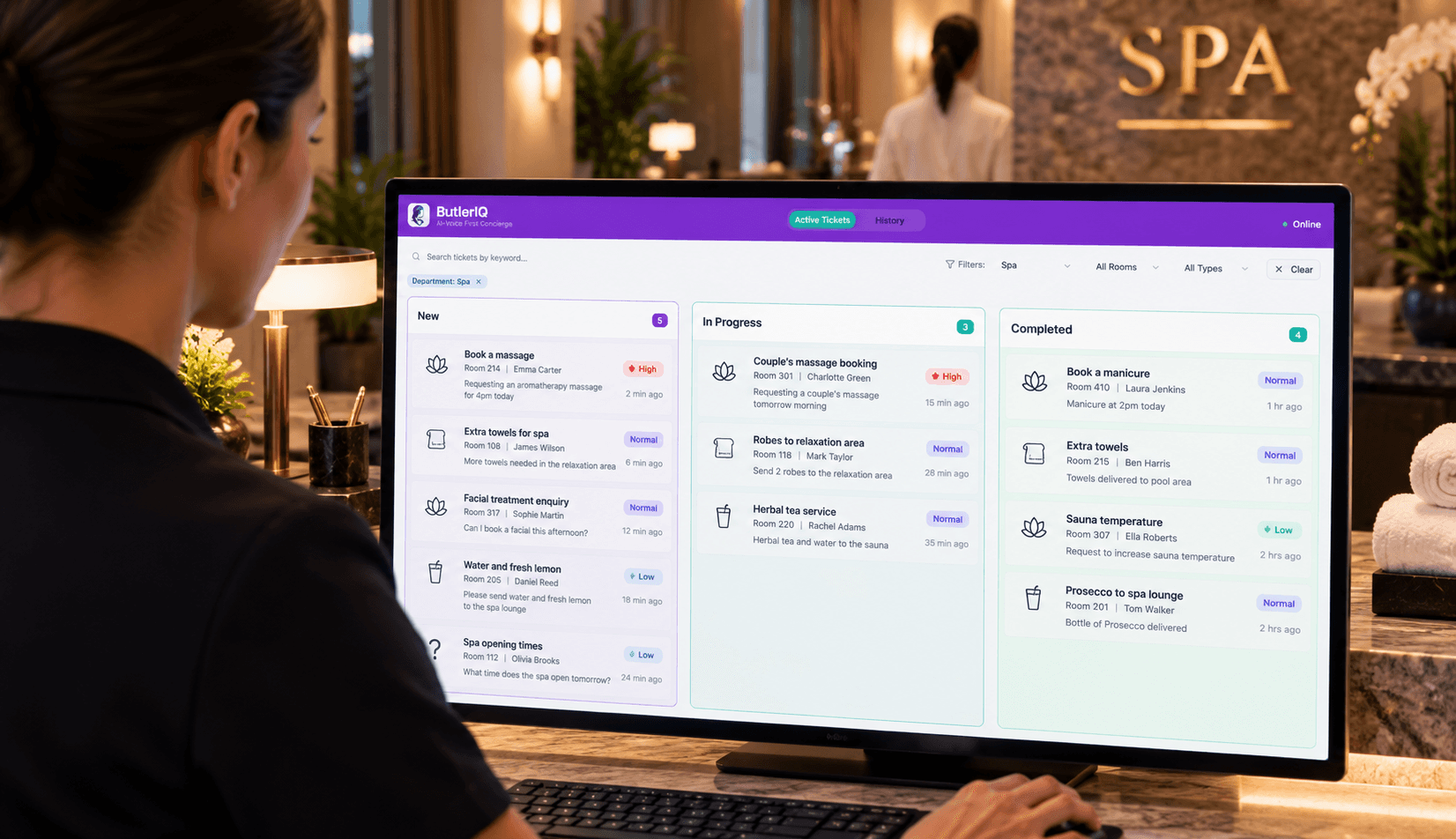
Staff adoption needs ownership. Appoint one "champion" per shift, write a one-page SOP for common tasks, and set a rule for escalation when a tool fails. If your team is already stretched, it can help to review options like the ButlerIQ product suite for hotel operations so you can see how guest devices, admin controls, and staff workflows can fit together before you commit.
Conclusion
The best hotel owner technology solutions in 2026 are not the biggest stacks, they are the stacks you can run consistently. If you anchor every tool to a problem and a metric, you'll spend less time firefighting and more time improving occupancy, service, and margin. Keep it minimal, integrate early, and train your team like the tech is part of the operation, because it is.
Frequently Asked Questions about Hotel Owner Technology Solutions
What are hotel owner technology solutions and why are they important?
Hotel owner technology solutions are targeted systems that address specific business problems like low occupancy or rising labour costs. They are important because they improve key metrics such as RevPAR, guest satisfaction, and operational efficiency, leading to better revenue and margins.
How can I start choosing the right technology for my hotel?
Begin by identifying one clear business problem, such as low direct bookings or slow guest response times, and choose technology that can improve measurable metrics within 90 days. This disciplined approach avoids unnecessary tools and ensures each investment delivers real value.
What are essential technology components to increase direct bookings?
A mobile-first website that loads fast, an integrated booking engine with real-time availability and easy payment options, plus optimised local SEO including an updated Google Business Profile, are essential to attract and convert more direct bookings, reducing reliance on OTAs.
How can guest messaging automation improve hotel operations?
Automated guest messaging handles repetitive queries pre-arrival, during the stay, and post-stay, freeing staff from routine tasks. This improves response and resolution times, enhances guest experience, and boosts review scores by ensuring timely communication and service requests.
What is a simple revenue stack for managing hotel pricing and availability?
A lean revenue stack includes a cloud PMS as the system of record, a channel manager to synchronise rates and availability across OTAs, and clear rate rules or a basic revenue management system using demand signals to optimise pricing strategies and avoid overbookings.
How do lightweight CRM and email automation help turn guests into repeat customers?
A lightweight hotel CRM unifies guest data to build profiles and segment customers. Automated campaigns such as pre-arrival offers, post-stay thank-yous with review prompts, and win-back emails encourage direct repeat bookings, reducing acquisition costs and increasing loyalty.
Sep 25, 2026
Hospitality Innovation
Guest Request Routing for Hotels in 2026: Cut Front Desk Workload Without Adding Headcount
Manual guest requests quietly eat hours of front desk time every week. See how automatic request routing works, what it saves your team, and how to evaluate it for your property.

Sep 15, 2026
Hotel Upselling Solutions: Why Pre-Arrival Isn't Enough
Hotel upselling doesn't require aggressive sales tactics—it requires smart timing and conversational delivery. Learn how modern hotels use voice-first AI and personalised offers to increase ancillary revenue by £15–£30 per stay while keeping guests feeling genuinely helped, not pressured. This guide covers proven upselling strategies, multilingual AI integration, and weekly KPI tracking for UK SME properties

Aug 14, 2026
Smart Hotel Rooms: Why the First Wave Failed, and What the Next One Looks Like
Smart hotel rooms promised a lot and delivered little. Here's what changed, what a genuinely smart room does in 2026, and how UK operators should approach it.
