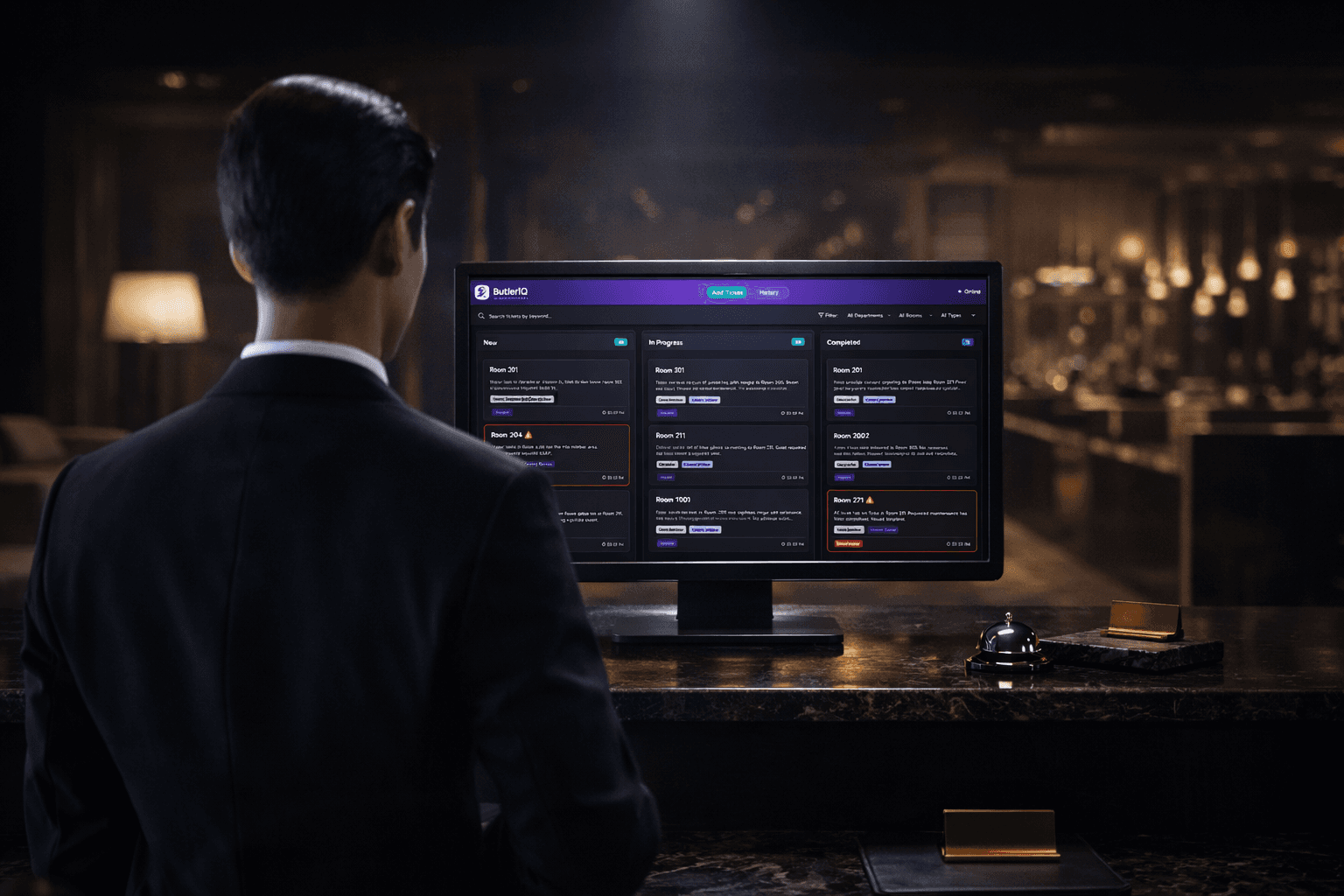
Hotel Operations, AI in Hospitality
How to Reduce Front Desk Workload in Hotels (Without Hiring More Staff)
Struggling with front desk pressure? Discover how hotels are reducing workload, improving service, and scaling operations without hiring more staff.
The front desk is under more pressure than ever
Ask any hotel operator where the pressure sits — it’s the front desk.
It’s where:
every guest interaction starts
every problem lands
every delay becomes visible
And increasingly, it’s where things begin to break.
You don’t need a report to tell you that. You see it daily:
queues at check-in
phones constantly ringing
staff juggling multiple systems
guests waiting for simple answers
The problem isn’t effort.
It’s volume.
The real issue: too many low-value interactions
Here’s the uncomfortable truth:
Most front desk workload isn’t complex.
It’s repetitive.
Think about the last 100 guest interactions:
WiFi passwords
breakfast times
towel requests
directions
late checkout queries
Individually? Simple.
Collectively? Overwhelming.
And it adds up fast.
Industry data suggests that a large proportion of guest queries are repetitive and predictable, meaning they don’t require human judgement — just fast, accurate responses.
Yet we still route all of them through the front desk.
Why hiring more staff isn’t the answer
The default reaction is obvious:
“We need more people.”
But that approach has limits.
Labour costs keep rising
Recruitment is getting harder
Training takes time
Turnover resets everything
And even if you hire:
👉 you’re scaling the same inefficient system
You’re not fixing the root problem.
What high-performing hotels are doing differently
The hotels pulling ahead aren’t just adding staff.
They’re redesigning how guest interactions work.
They’re asking:
“What should never reach the front desk in the first place?”
And that’s where the shift happens.
What is front desk workload reduction (really)?
Reducing front desk workload doesn’t mean reducing service.
It means:
removing unnecessary interactions
automating repetitive tasks
routing requests intelligently
giving guests faster answers without staff dependency
Done properly, it actually improves the guest experience.
Where the biggest wins are (and they’re not complicated)
If you strip it back, there are four areas where most hotels can make immediate impact:
1. Guest questions
The same questions, every day.
2. Service requests
Housekeeping, maintenance, room service
3. Internal routing
Front desk acting as the middle layer
4. Upsell interactions
Missed because staff are too busy
These aren’t edge cases.
They’re the majority of interactions.
The shift: from staff-dependent to system-driven
This is where technology becomes interesting — if it’s used correctly.
Most hotels have tried:
apps
chatbots
messaging platforms
But they still rely on:
👉 guest effort
👉 staff intervention
So the impact is limited.
The real shift is:
from “staff handling requests”
to “systems resolving them instantly”
Why voice-first technology changes the equation
This is where voice-first AI starts to stand out.
Because it removes friction entirely.
Instead of:
calling reception
opening an app
scanning a QR code
Guests just say:
“Can I get more towels?”
“What time is checkout?”
“Book me a taxi”
And it’s handled instantly.
No queue.
No delay.
No staff interruption.
What this looks like operationally
Let’s make it real.
Before:
Guest calls reception
Staff answers
Logs request
Contacts housekeeping
Follows up
After:
Guest speaks request
System routes it instantly
Task is delivered
No bottleneck.
No middle layer.
The impact hotels are starting to see
Hotels adopting automation and AI-driven workflows are seeing:
Fewer interruptions
Front desk teams aren’t constantly pulled into low-value interactions
Faster response times
Guests get answers immediately, not eventually
Better staff focus
Teams spend time on high-value guest moments
More consistent service
Every guest gets the same accurate experience
And importantly:
👉 fewer errors
👉 fewer missed requests
👉 fewer frustrated guests
The hidden upside: better revenue, not just efficiency
Here’s something most operators miss.
When staff are overloaded:
upsells don’t happen
opportunities are missed
conversations are rushed
When you remove pressure:
staff engage better
systems can prompt offers
revenue moments are captured
Reducing workload doesn’t just save time.
It unlocks revenue.
Where ButlerIQ fits into this shift
This is exactly the problem ButlerIQ is designed to solve.
Not by replacing staff.
But by removing the friction around them.
As a voice-first AI concierge, ButlerIQ:
answers guest questions instantly
handles service requests automatically
routes tasks to the right teams
supports multiple languages
enables real-time upselling
All without adding pressure to your front desk.
The result?
👉 fewer interruptions
👉 faster service
👉 better guest experience
👉 more revenue opportunities
The bigger question hotels should be asking
It’s not:
“How do we handle more requests?”
It’s:
“Why are these requests reaching staff at all?”
Because once you solve that:
Everything changes.
FAQ: Reducing Front Desk Workload in Hotels
What causes front desk overload in hotels?
Primarily high volumes of repetitive guest queries and service requests that require manual handling.
Can automation replace front desk staff?
No — but it removes low-value tasks so staff can focus on meaningful guest interactions.
What technology helps reduce workload?
AI-driven solutions, particularly voice-first systems, can handle guest queries and route requests automatically.
Does this impact guest experience?
Positively. Guests receive faster, more consistent responses without waiting.
Final thought
The front desk isn’t broken because of people.
It’s broken because of process.
Fix the process — and everything else improves:
service
efficiency
revenue
guest satisfaction
And the hotels that realise that early?
They won’t just reduce workload.
They’ll redefine how service is delivered.
Sep 25, 2026
Hospitality Innovation
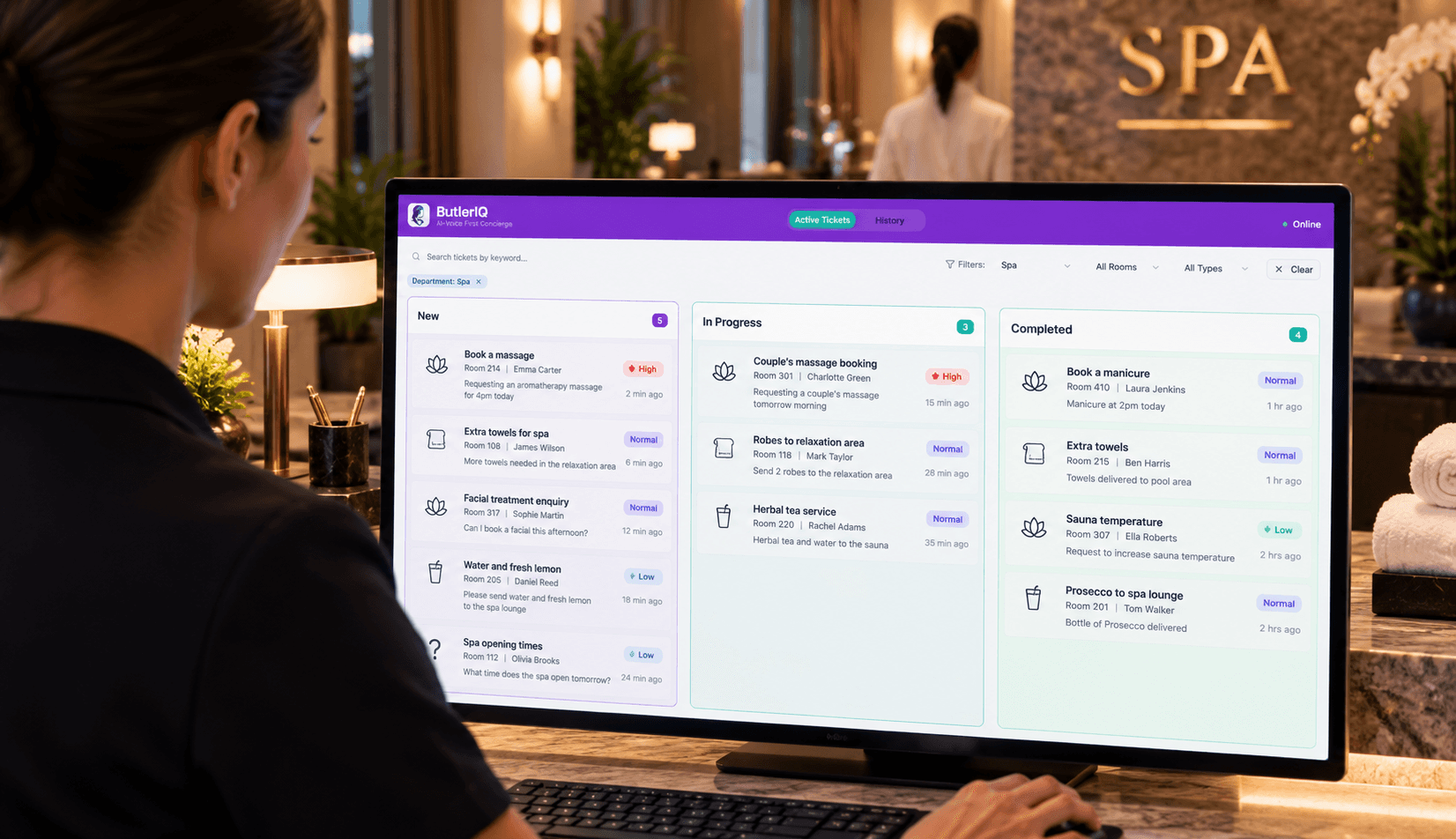
Guest Request Routing for Hotels in 2026: Cut Front Desk Workload Without Adding Headcount
Manual guest requests quietly eat hours of front desk time every week. See how automatic request routing works, what it saves your team, and how to evaluate it for your property.

Sep 15, 2026
Hotel Upselling Solutions: Why Pre-Arrival Isn't Enough
Hotel upselling doesn't require aggressive sales tactics—it requires smart timing and conversational delivery. Learn how modern hotels use voice-first AI and personalised offers to increase ancillary revenue by £15–£30 per stay while keeping guests feeling genuinely helped, not pressured. This guide covers proven upselling strategies, multilingual AI integration, and weekly KPI tracking for UK SME properties

Aug 14, 2026
Smart Hotel Rooms: Why the First Wave Failed, and What the Next One Looks Like
Smart hotel rooms promised a lot and delivered little. Here's what changed, what a genuinely smart room does in 2026, and how UK operators should approach it.
