Guest Experience, AI in Hospitality
Why Hotel Apps Fail (And What Guests Actually Want Instead)
Hotel apps promised better guest experiences—but most fail. Discover why adoption is low and what guests actually prefer today.
The promise of hotel apps sounded great
For years, hotel apps were positioned as the future.
The idea made sense:
Guests download the app
Control their stay
Order services
Communicate with staff
On paper, it looked like a step forward.
Digital. Convenient. Modern.
But in reality?
Most hotel apps never delivered on that promise.
The uncomfortable truth: guests don’t use them
Let’s be honest.
When was the last time you downloaded a hotel app before a stay?
Exactly.
The reality is:
most guests don’t download hotel apps
those who do rarely use them more than once
engagement drops off quickly
And that creates a problem.
Because if the guest never engages…
👉 the technology has zero impact
Why hotel apps fail (it’s not just one thing)
It’s easy to blame execution.
But the issue runs deeper.
1. Friction at the start
Download → register → login
That’s already too much effort for most guests.
2. Low perceived value
Guests don’t think:
“I need this app”
They think:
“I’ll just ask someone”
3. One-time usage problem
Even if they download it…
👉 they won’t use it again
Every hotel = a new app
No long-term habit
4. Poor in-stay behaviour fit
Guests don’t want to:
scroll
search
navigate menus
They want immediacy.
The bigger issue: apps don’t match guest behaviour
This is the key insight.
Hotel apps are built around:
👉 how systems work
Not:
👉 how humans behave
Guests don’t want to “use a system”.
They want to:
ask
receive
move on
That’s it.
What guests actually want instead
If you strip it back, guests want three things:
1. Zero effort
No downloads
No setup
No friction
2. Instant response
Not “we’ll get back to you”
But “done”
3. Natural interaction
Not menus
Not forms
Just:
“Can I get more towels?”
Why chat and messaging didn’t fully solve it
Some hotels moved to:
WhatsApp
SMS
chat platforms
Better — but still limited.
Because:
👉 it still requires typing
👉 it still relies on staff
👉 it still introduces delay
So while it improves things…
It doesn’t remove friction.
The shift: from apps to ambient experiences
This is where the market is moving.
From:
“Open the app”
To:
“Just interact with your environment”
Technology becomes:
invisible
immediate
always available
And this is where voice-first systems stand out.
Why voice-first wins (and it’s not hype)
Voice works because it mirrors natural behaviour.
Guests don’t think:
“Let me find the right feature”
They think:
“I need something”
And voice lets them express that instantly.
What this looks like in practice
A guest walks into their room.
Instead of:
searching for information
calling reception
opening an app
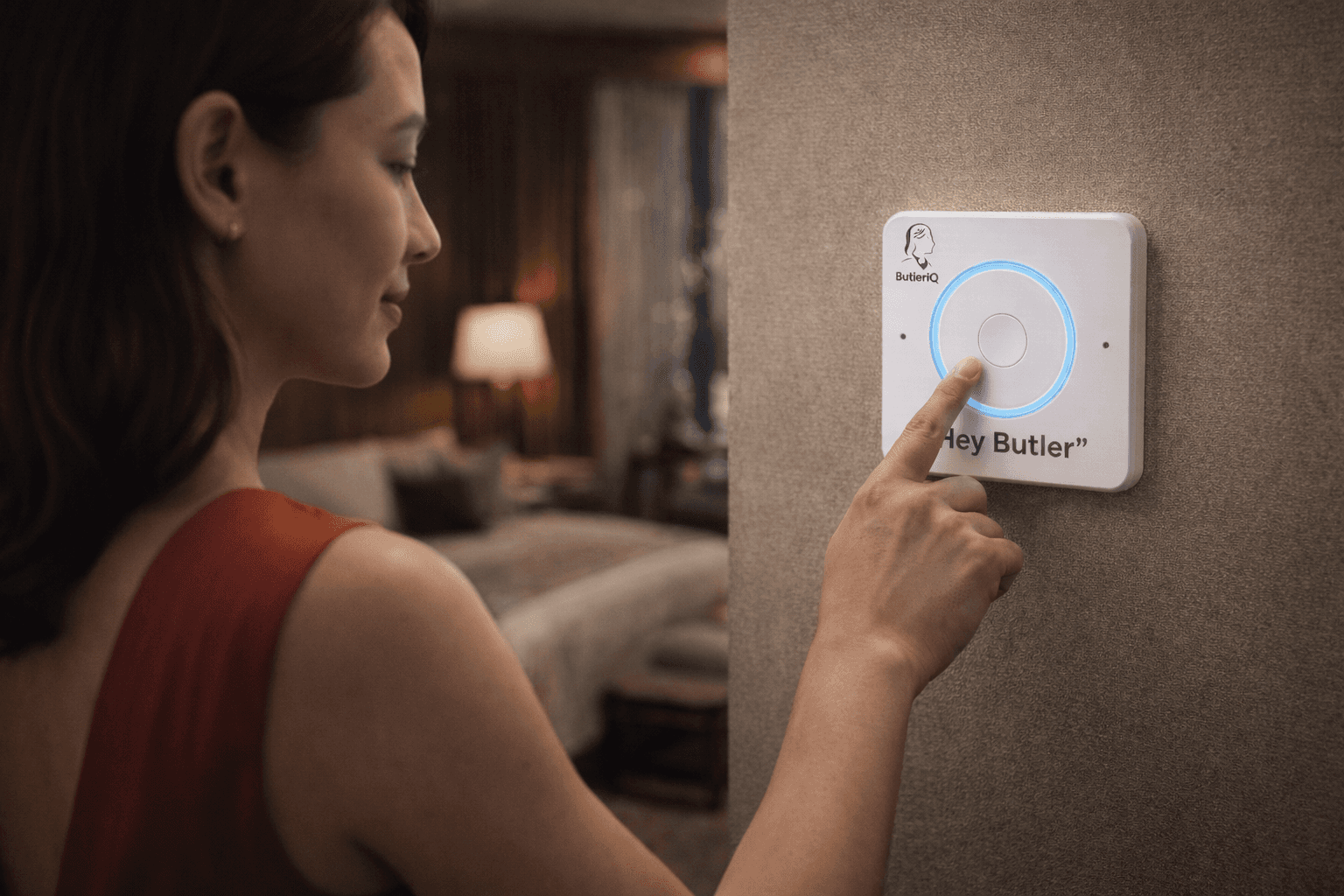
They simply say:
“What time is breakfast?”
“Send housekeeping”
“Book me dinner”
And it happens.
That’s the difference.
The hidden impact on operations
This isn’t just about UX.
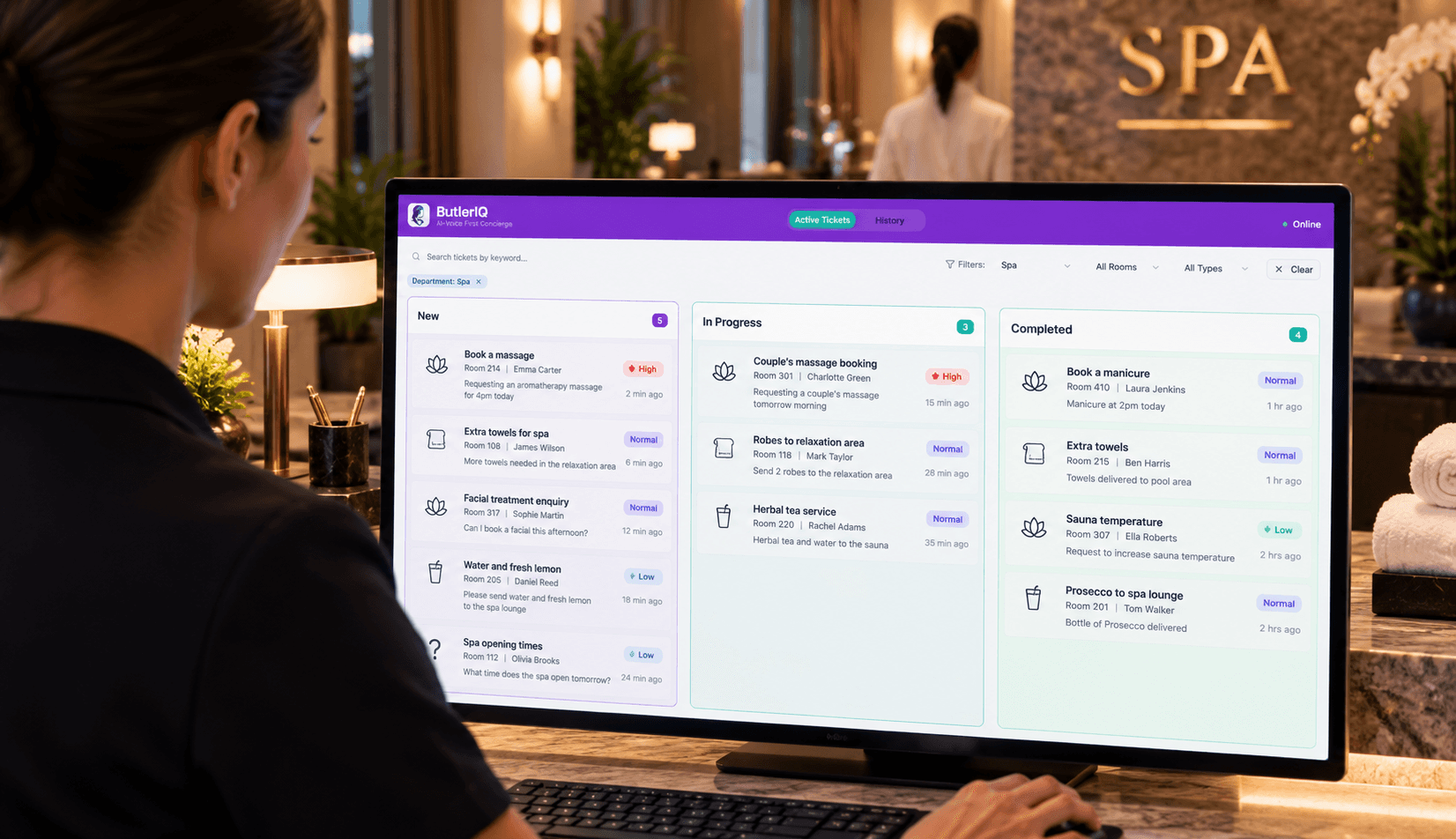
When apps fail:
requests still hit the front desk
staff workload increases
service slows down
When friction is removed:
requests are handled instantly
staff focus improves
guest satisfaction rises
Where ButlerIQ fits into this
ButlerIQ is built around a simple idea:
👉 Guests shouldn’t need to learn how to use your hotel
They should just interact with it.
As a voice-first AI concierge, ButlerIQ:
removes the need for apps entirely
enables natural guest interaction
handles requests instantly
supports multiple languages
integrates into hotel operations
It’s not another channel.
It’s a different model.
The bigger shift in hospitality technology
We’re moving from:
app-first experiences
screen-based interaction
manual workflows
To:
voice-first interaction
AI-driven automation
frictionless service delivery
And once guests experience that…
It becomes the new expectation.
FAQ: Hotel Apps vs Voice AI
Do hotel apps still have a place?
Yes — but mainly for pre-arrival or loyalty use cases, not core in-stay interaction.
Why don’t guests use hotel apps?
Friction, low perceived value, and lack of repeat usage.
Is voice technology better for hotels?
For in-stay interactions, yes. It removes friction and enables instant service.
Does this replace staff?
No — it reduces low-value interactions so staff can focus on guest experience.
Final thought
Hotel apps didn’t fail because the idea was wrong.
They failed because they asked too much from the guest.
The future of hospitality technology isn’t:
👉 “more features”
It’s:
👉 less effort
And the solutions that win will be the ones guests don’t have to think about at all.
Sep 25, 2026
Hospitality Innovation
Guest Request Routing for Hotels in 2026: Cut Front Desk Workload Without Adding Headcount
Manual guest requests quietly eat hours of front desk time every week. See how automatic request routing works, what it saves your team, and how to evaluate it for your property.

Sep 15, 2026
Hotel Upselling Solutions: Why Pre-Arrival Isn't Enough
Hotel upselling doesn't require aggressive sales tactics—it requires smart timing and conversational delivery. Learn how modern hotels use voice-first AI and personalised offers to increase ancillary revenue by £15–£30 per stay while keeping guests feeling genuinely helped, not pressured. This guide covers proven upselling strategies, multilingual AI integration, and weekly KPI tracking for UK SME properties

Aug 14, 2026
Smart Hotel Rooms: Why the First Wave Failed, and What the Next One Looks Like
Smart hotel rooms promised a lot and delivered little. Here's what changed, what a genuinely smart room does in 2026, and how UK operators should approach it.
