Guest Experience, AI in Hospitality
Enhancing Luxury Hospitality with AI Voice Assistants
Luxury hotels are using AI voice assistants to elevate comfort and personalization to new levels.
The hotel room phone is still there… but barely used
Walk into almost any hotel room.
It’s there:
on the bedside table
on the desk
untouched
The hotel room phone has been a standard fixture for decades.
But ask yourself:
👉 When was the last time you used one?
Exactly.
The problem isn’t that it exists — it’s that it hasn’t evolved
The room phone was built for a different era.
An era where:
calling reception was the only option
information wasn’t easily accessible
service required human mediation
That’s no longer true.
Today:
guests expect instant answers
information is on-demand
service needs to be seamless
And the room phone hasn’t kept up.
Why the hotel phone no longer fits modern guest behaviour
Let’s break it down.
1. It introduces friction
Pick up → wait → speak → repeat
Compared to modern expectations:
👉 that’s slow
2. It depends on staff availability
If reception is busy:
guests wait
requests are delayed
3. It creates bottlenecks
Every interaction funnels through the front desk
4. It doesn’t scale
More guests = more calls
More calls = more pressure
Yet hotels still keep it — why?
This is where it gets interesting.
Hotels don’t keep room phones because they’re effective.
They keep them because:
they’re familiar
they’re expected
they’re “safe”
But familiar doesn’t mean optimal.
The shift already happening (quietly)
Hotels are starting to question:
“What is the room phone actually solving?”
And more importantly:
“Is there a better way to handle guest communication?”
The answer is increasingly:
👉 yes
What replaces the hotel room phone?
Not apps.
Not QR codes.
Not chatbots alone.
The real replacement needs to be:
always available
instant
easy to use
natural
And that leads to one direction:
👉 voice-first AI
Why voice is the natural replacement
Voice isn’t new.
But what’s changed is what sits behind it.
AI now enables voice to:
understand natural language
respond intelligently
trigger real actions
operate instantly
So instead of:
“Call reception”
It becomes:
“Just ask”
What this looks like in a modern hotel room
A guest walks in and says:
“What time is breakfast?”
“Can I get more towels?”
“Book me a taxi”
And it happens.
No phone.
No waiting.
No friction.
The operational impact (this is where hotels care)
Replacing the phone isn’t just a UX upgrade.
It changes how the hotel operates.
Fewer front desk interruptions
Repetitive calls disappear
Faster service delivery
Requests go directly to the right team
Better staff utilisation
Less admin, more guest experience
More consistent service
Every guest gets the same response
The hidden upside: revenue
The room phone never generated revenue.
It handled requests.
That’s it.
Voice AI changes that.
Because now:
requests become opportunities
conversations become upsells
intent becomes action
Example:
Guest:
“Can I check out later?”
System:
“Late checkout is available until 2pm for £25 — would you like to add that?”
That’s not just service.
👉 That’s revenue capture
Why alternatives haven’t replaced the phone yet
You might think:
“Haven’t hotels already tried alternatives?”
They have.
Apps → low adoption
QR codes → friction
Messaging → still staff-dependent
Each improves something.
None remove friction completely.
Why this shift is inevitable
This isn’t about trends.
It’s about alignment with behaviour.
Guests already:
talk to devices at home
expect instant responses
avoid friction
Hotels are just catching up.
And once a better experience exists:
👉 the old one fades fast
Where ButlerIQ fits into this future
ButlerIQ is built for exactly this shift.
Not as a feature.
But as a replacement model.
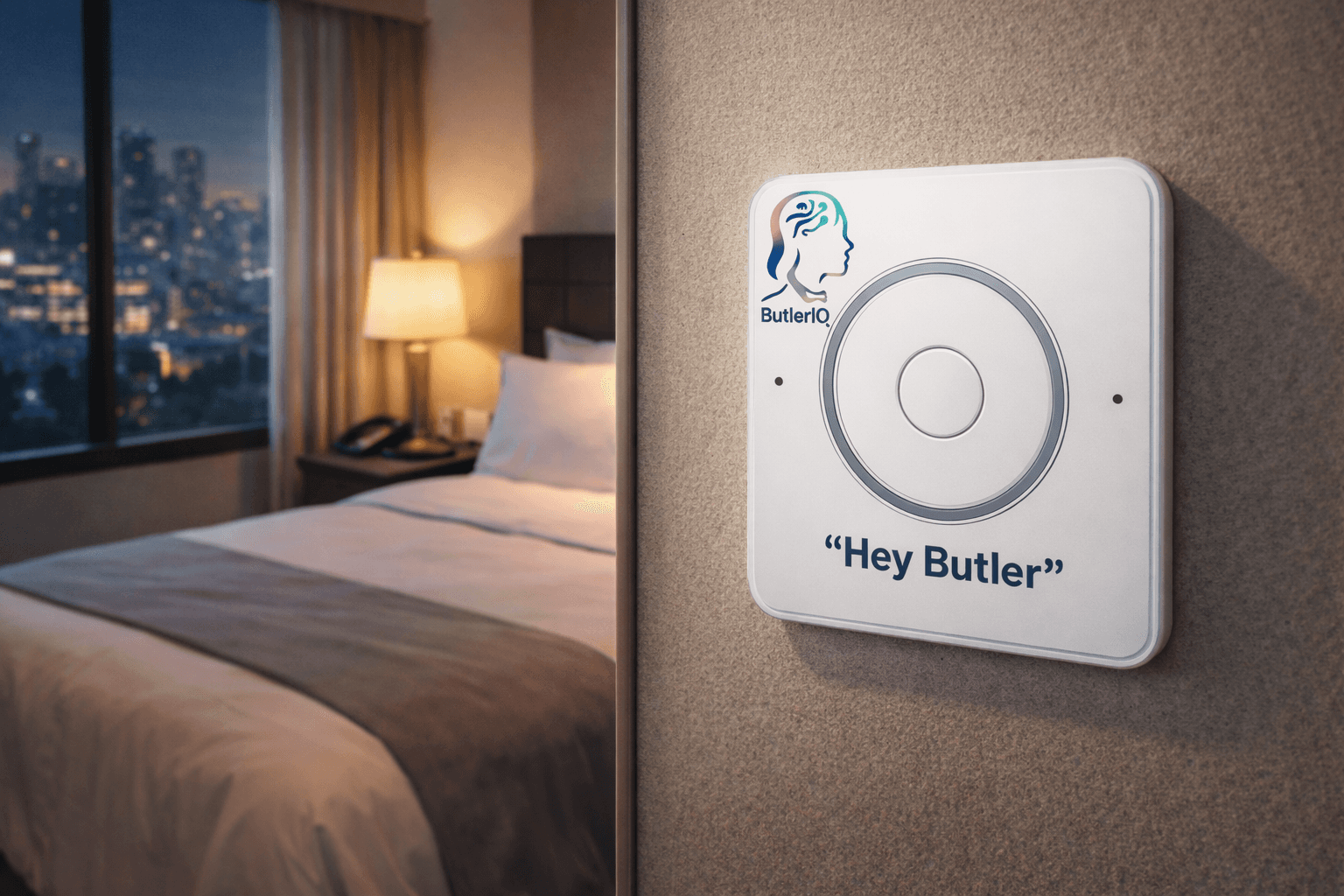
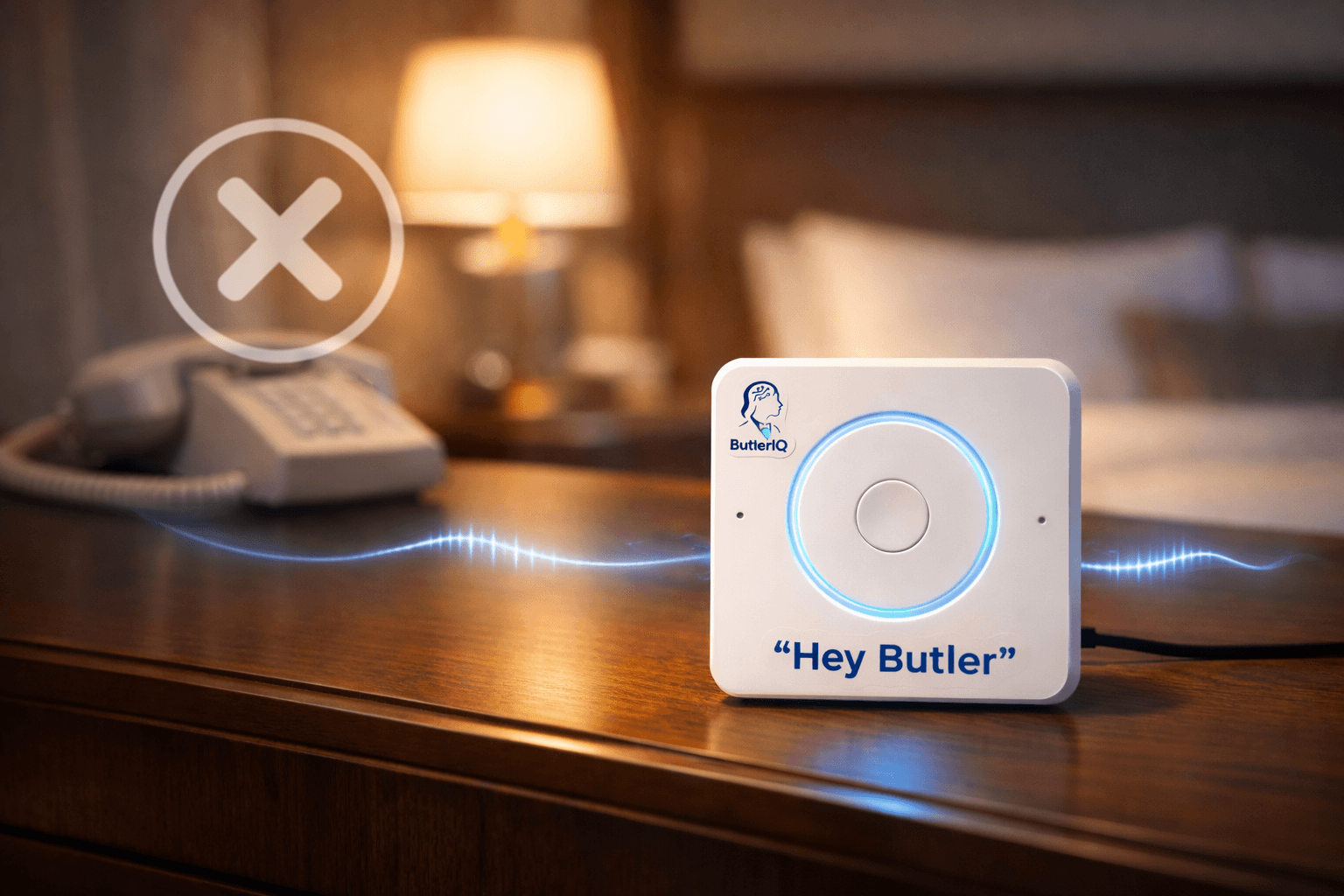
As a voice-first AI concierge, ButlerIQ:
replaces the need for the room phone
handles guest requests instantly
routes tasks automatically
supports multiple languages
enables real-time upselling
It doesn’t just improve communication.
It redefines it.
The bigger question hotels should be asking
It’s not:
“Do we still need the room phone?”
It’s:
“What experience are we trying to deliver?”
Because once you answer that honestly…
The direction becomes obvious.
FAQ: Hotel Room Phones vs Voice AI
Are hotel room phones still necessary?
They are still common, but increasingly underused and inefficient.
What can replace a hotel room phone?
Voice-first AI systems that handle guest requests instantly and naturally.
Do guests prefer voice interaction?
Increasingly, yes—especially when it removes friction and speeds up service.
Does this reduce staff workload?
Yes. It removes repetitive calls and improves operational efficiency.
Final thought
The hotel room phone isn’t broken.
It’s just outdated.
And like most outdated systems, it will be replaced quietly — not all at once, but steadily.
By something:
faster
easier
more aligned with how people actually behave
And once that shift happens…
There’s no going back.